
Poland and the two German states, late 1940s to mid-1970s
Poland and the two German states, late 1940s to mid-1970s
The Department of History and Classical Studies in the Faculty of Arts at McGill University, in collaboration with the Polish Institute of Arts and Sciences in Canada, is presenting a conference on the international relationship between Poland and the two German states, featuring guest speaker Professor Lorenz M. Lüthi, with an introduction by Associate Professor Daniel W. Pratt.
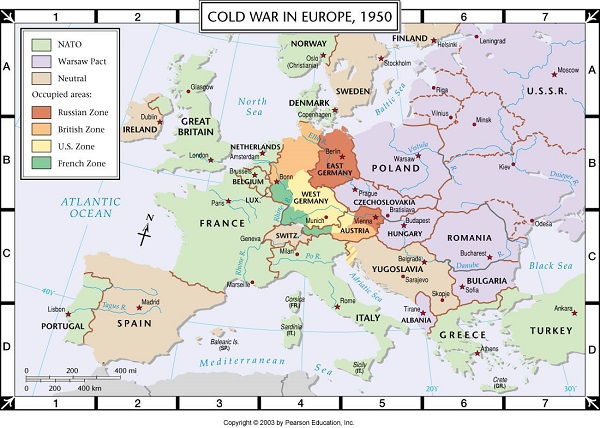
Poland and Germany re-emerged from World War II in territorially reconstituted fashion and in parallel processes of renewed state formation. Germany also re-appeared in politically antagonistic division. The triangular relationship contained two sets of conflict - the historical Polish-German antagonism, and the East-West clash between two Communist states and one capitalist country. On the surface, the main source of the two conflicts was the legal status of Poland's new Western borders and their uncertain recognition by both German states until the early 1970s. But at a deeper level, Poland's struggle for territorial recognition was intimately connected to West Germany's attempt to keep German reunification on the table, while it forced the Polish Catholic Church into an uneasy quasi-alliance with the Communist state about Polish statehood. Only once German-German rapprochement occurred in the early 1970s did West Germany express respect for Poland's post-1945 territoriality, which in turn enabled the Polish Catholic Church to defect from the quasi-alliance and resurface in opposition to the Communist regime. European détente thereby opened the door to the end of Communism in Europe.
Poland and Germany re-emerged from World War II in territorially reconstituted fashion and in parallel processes of renewed state formation. Germany also re-appeared in politically antagonistic division. The triangular relationship contained two sets of conflict - the historical Polish-German antagonism, and the East-West clash between two Communist states and one capitalist country. On the surface, the main source of the two conflicts was the legal status of Poland's new Western borders and their uncertain recognition by both German states until the early 1970s. But at a deeper level, Poland's struggle for territorial recognition was intimately connected to West Germany's attempt to keep German reunification on the table, while it forced the Polish Catholic Church into an uneasy quasi-alliance with the Communist state about Polish statehood. Only once German-German rapprochement occurred in the early 1970s did West Germany express respect for Poland's post-1945 territoriality, which in turn enabled the Polish Catholic Church to defect from the quasi-alliance and resurface in opposition to the Communist regime. European détente thereby opened the door to the end of Communism in Europe.
Details
No registration required.
Thursday, January 30, 2020
6 PM to 8 PM
6 PM to 8 PM
Chapelle Saint-Louis
4230 rue Drolet / Rachel
Montreal, Quebec, H2W 2L6
CANADA
View map
4230 rue Drolet / Rachel
Montreal, Quebec, H2W 2L6
CANADA
×
